
While Hajj concentrates its demand into a single week each year, Madinah Al-Munawwarah faces a different kind of food service challenge: a 12-month high-season driven by Umrah pilgrims visiting the Prophet’s Mosque. With an estimated 20–22 million Umrah visitors annually (a figure growing steadily toward Saudi Vision 2030’s 30 million target), Madinah’s HORECA sector operates at peak-or-near-peak demand for most of the year — with its own distinct procurement rhythms, visitor demographics, and supply chain considerations.
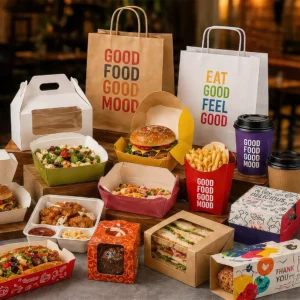
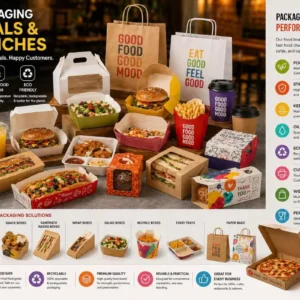
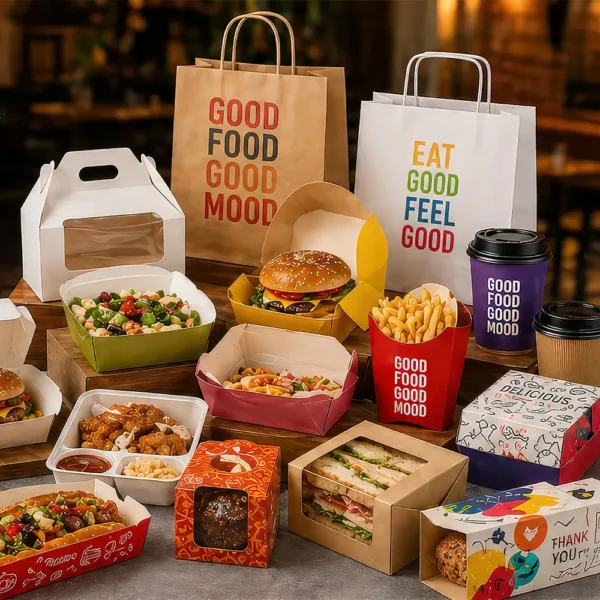
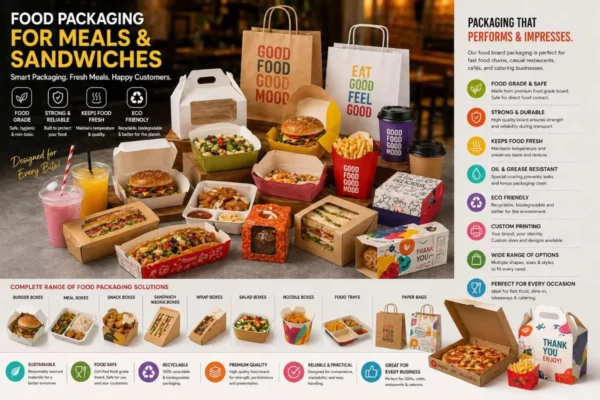
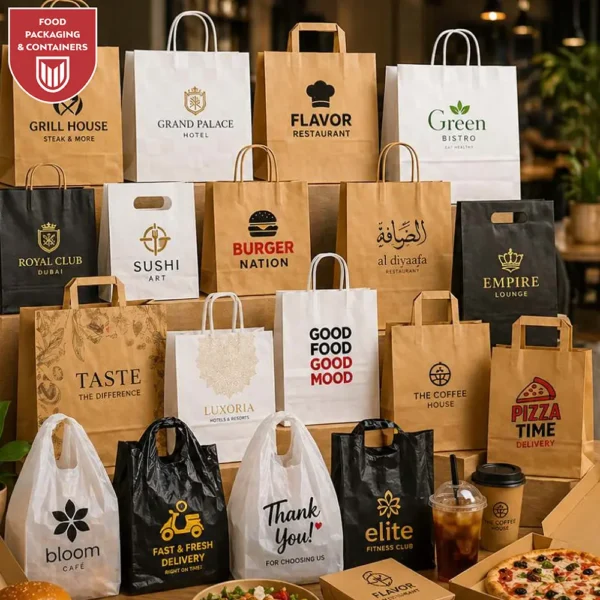
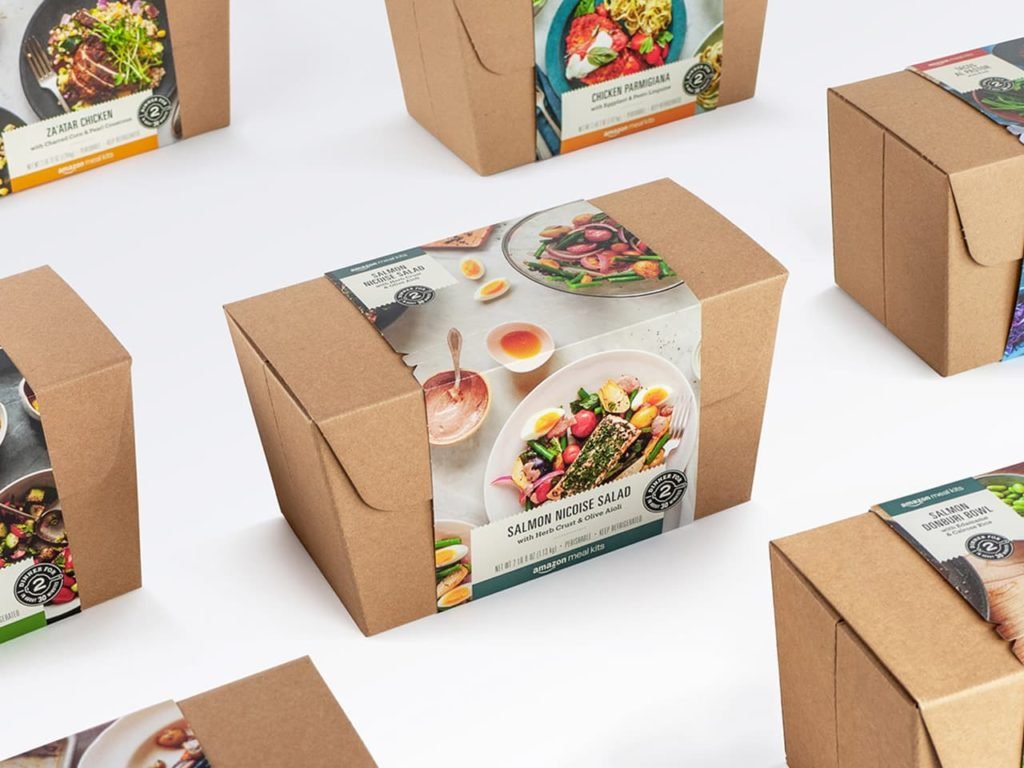
Premium Food Packaging for Meals & Sandwiches – Smart, Fresh, and Sustainable Solutions
Our food board packaging is designed for every bite, ensuring fresh meals and happy customers. Made from premium food-grade board, these strong and durable containers maintain food temperature and quality, making them perfect for fast food chains, cafes, and catering businesses.
Why Madinah’s Food Packaging Demand Is Structurally Different from Jeddah or Riyadh
Madinah’s food service demand profile is unique in Saudi Arabia for three reasons that directly affect food packaging procurement:
- Proximity to the Prophet’s Mosque (Al-Masjid an-Nabawi): The area immediately surrounding the mosque — the haram zone — contains hundreds of restaurants, catering counters, and food vendors serving pilgrims 24 hours a day. This is not a conventional city food service market; it operates at continuous high volume year-round with minimal seasonal variation in daily demand
- International pilgrim demographics: Umrah visitors come from every Muslim-majority country on earth — Indonesia, Pakistan, Bangladesh, Egypt, Turkey, Nigeria, Malaysia, India, and dozens more. Food packaging serving this population must accommodate enormous cultural diversity in food types (not just Middle Eastern cuisine), serving sizes, and dietary requirements (halal is universal, but spice profile, portion size expectations, and meal timing vary dramatically)
- Year-round peak, not seasonal spike: Unlike Makkah (which is effectively two cities — a normal city for 11 months and an emergency-scale food operation for one month), Madinah is always busy. The variation between peak Ramadan and quietest months is approximately 2–3x, not the 10x swings seen in Makkah during Hajj. This changes the procurement calculus: steady-state supply chain reliability matters more than singular peak-season planning
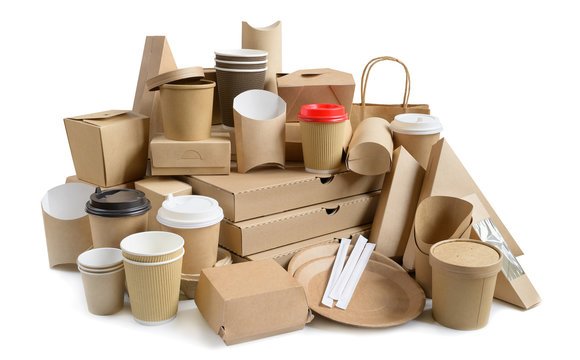
Umrah Visitor Segments and Their Food Packaging Needs
Not all Umrah visitors have the same food service requirements. Understanding the segmentation helps Madinah operators stock the right packaging mix:
| Visitor Segment | Estimated Annual Volume | Primary Food Packaging Needs | Service Model |
|---|---|---|---|
| Budget Umrah (economy hotels + self-catering) | 8–10 million | Simple containers, basic cutlery, takeaway cups | Street food / hotel counter |
| Mid-market Umrah packages | 6–8 million | Standard containers, branded cups, disposable trays | Hotel breakfast / restaurant takeaway |
| Premium/luxury Umrah | 2–3 million | Quality containers, branded packaging, banquet disposables | Hotel F&B, room service, catering |
| Transit pilgrims (short-stay, Medina Airport) | 1–2 million | Portable, single-serve, easy-open packaging | Airport F&B, transit hotels |
The bulk of Madinah’s food packaging consumption comes from the budget and mid-market segments — high-volume, straightforward products. But the premium segment, while smaller in number, drives demand for higher-specification products and is more likely to have international supply chain expectations.
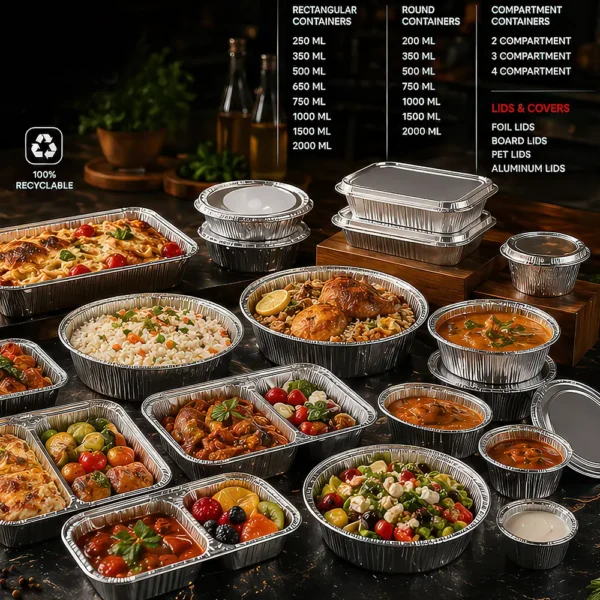
Food Grade Aluminum Food Containers – Smart Packaging for Maximum Performance
Our food-grade aluminum containers are designed to deliver safety, convenience, and reliability for every meal. Featuring superior strength and 100% recyclability, these containers provide an eco-friendly and professional solution for baking, freezing, and transporting food.
Ramadan in Madinah: The Annual Peak for Food Packaging
Ramadan in Madinah is qualitatively different from Ramadan in Jeddah or Riyadh. The city’s spiritual significance — pilgrims specifically seek to spend Ramadan in Madinah, particularly the last 10 days — drives occupancy rates above 95% for most Madinah hotels throughout the month, with near-100% occupancy during the final 10 nights.
The food packaging implications:
- Iftar demand surge: Iftar service in Madinah’s haram-proximate hotels and restaurants operates at 3–5x normal daily volume. A hotel that normally serves 200 iftar covers may serve 800–1,000 covers on a busy Ramadan night. Every meal requires containers, cutlery, cups, and trays
- Suhoor service: Suhoor catering for hotel guests and nearby restaurants operates from approximately 2:00–4:30 AM — an unusual service window that requires packaging appropriate for pre-dawn meal delivery to rooms and large function spaces
Leftover management: Madinah’s hotel kitchens face the same post-Ramadan inventory management challenge as Jeddah, requiring food-grade storage solutions and cling film for leftover prepared foods - Laylatul Qadr peak: The final 10 nights of Ramadan — especially Laylatul Qadr (estimated 27th night) — represent the absolute peak of Madinah’s annual food service operation. Pilgrims fasting during the day and celebrating at night create a 24-hour food service cycle. Packaging needs to perform at both ends of this cycle
SFDA Compliance for Food Packaging in Madinah
SFDA food contact material regulations apply identically in Madinah as in the rest of Saudi Arabia. However, Madinah presents two specific compliance considerations that operators should factor into their procurement:
- Multilingual labeling expectations: Given the extreme international diversity of Madinah’s pilgrim population, hotel F&B operations and restaurant operators near the haram frequently encounter guests requesting to verify halal status or country of origin. Packaging with clearly printed halal certification marks and Arabic/English labeling reduces these service interruptions
- Cold chain considerations: Unlike Makkah’s extreme heat, Madinah’s winter months (December–February) can see temperatures drop to 8–15°C at night — relevant for cold storage packaging choices. PP containers that perform well in both heat and moderate cold offer flexibility for Madinah’s seasonal variation
- Standard FCM requirements: Migration test documentation, SFDA compliance declaration, Arabic labeling, and CoC for any imported products — identical requirements to Jeddah and Riyadh
Madinah’s Supply Chain: Sourcing Food Packaging Locally vs. Via Jeddah
Madinah does not have a major commercial port — all imported food packaging supply chains route through Jeddah (King Fahd Industrial Port) before overland transport to Madinah. This creates a supply dynamic that favors operators who understand the logistics:
| Supply Channel | Typical Lead Time to Madinah | Premium vs. Jeddah Pricing | Best For |
|---|---|---|---|
| Madinah Local Distributor | 1–3 days | +15–30% above Jeddah | Emergency restocking, small operators |
| Riyadh National Distributor | 3–5 days | +20–35% above Jeddah | Volume operators with Riyadh accounts |
| Jeddah Port-Direct via Freight | 5–8 days (incl. clearance) | Baseline Jeddah pricing + SAR 3–5 per 100kg freight | Large-volume Madinah operators |
| Madinah Hajj/Umrah Specialist Importer | 3–7 days | +25–40% (but pre-verified for SFDA + halal) | Operators who need compliance confidence |
For a large Madinah hotel consuming SAR 80,000–120,000 per month in food packaging, the difference between Jeddah direct pricing and Madinah local distributor pricing represents SAR 12,000–48,000 in monthly savings — a compelling case for establishing a Jeddah-procurement relationship even for operators based in Madinah.
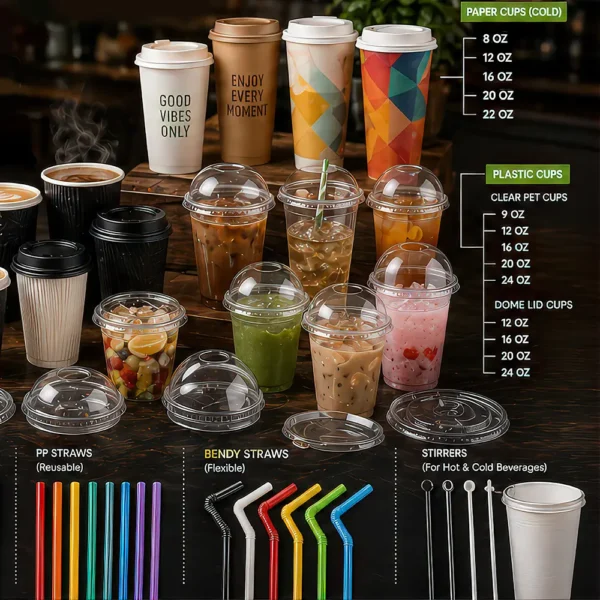
Premium Paper Cups, Plastic Cups & Straws – Smart Packaging, Sustainable Choice
Our responsibly designed cups and straws deliver convenience, hygiene, and sustainability with every sip. Made from premium food-grade materials, these durable and leak-resistant solutions are ideal for both hot and cold beverages in any professional setting.
Key Product Recommendations for Madinah HORECA
Based on the specific demand patterns of Madinah’s Umrah-driven market, these product categories warrant particular attention in procurement planning:
- Halal-certified disposable cutlery sets: Given the universal halal requirement, certified cutlery is not optional in Madinah — every supplier should be able to provide halal certification as standard. Look for PP or PS cutlery with clearly marked halal symbols
- Large-capacity food containers (1,000–2,000 ml): Group catering orders — where pilgrims share meals in the haram area or in hotel function rooms — require large-format containers that are less common in standard HORECA ranges
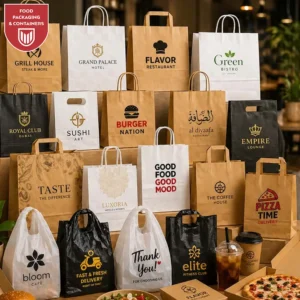
- Branded takeaway packaging: The premium Umrah segment expects presentation quality. Branded containers, printed paper cups, and quality foil trays with logos are in consistent demand at the top end of the market
- Insulated delivery packaging: Hotel room service and delivery to pilgrims’ accommodation requires packaging that maintains food quality over 15–30 minute delivery windows — an increasing channel as pilgrims extend their Umrah stays and order room service
- High-volume bin liner programme: The daily waste output of Madinah’s haram-proximate zone is enormous. A structured bin liner supply contract with a local distributor ensures consistent availability
MIMI Pure Performance: Food Packaging Supply for Madinah HORECA
MIMI Pure Performance supplies food packaging to hotel operators, catering companies, and restaurant groups throughout Madinah Al-Munawwarah. Our Jeddah-based supply chain serves Madinah operators with port-direct pricing, SFDA FCM compliance documentation, halal certification on all applicable products, and monthly delivery programmes designed for the city’s year-round high-volume HORECA environment. We work specifically with operators navigating the unique demands of Umrah-driven food service — from 24-hour haram-zone restaurant operations to Ramadan peak planning for luxury hotels.
Building or optimising your food packaging supply chain in Madinah? Contact MIMI Pure Performance — we supply HORECA operators across Madinah and understand the city’s specific procurement rhythms, seasonal peaks, and compliance requirements.