Dammam and the Eastern Province represent Saudi Arabia’s third-largest food service market — one that operates on fundamentally different economic drivers than Riyadh or Jeddah. Where Riyadh runs on government and retail spending and Jeddah on trade and pilgrimage, the Eastern Province is shaped by the oil and petrochemical industry. Saudi Aramco’s workforce of 70,000+ employees, the vast ecosystem of supporting contractors at Dhahran, Jubail Industrial City, and Yanbu, and the region’s deep-rooted expat community create a food service market with characteristics that directly affect packaging procurement strategy.
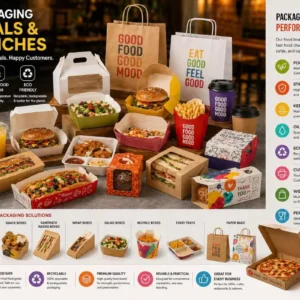
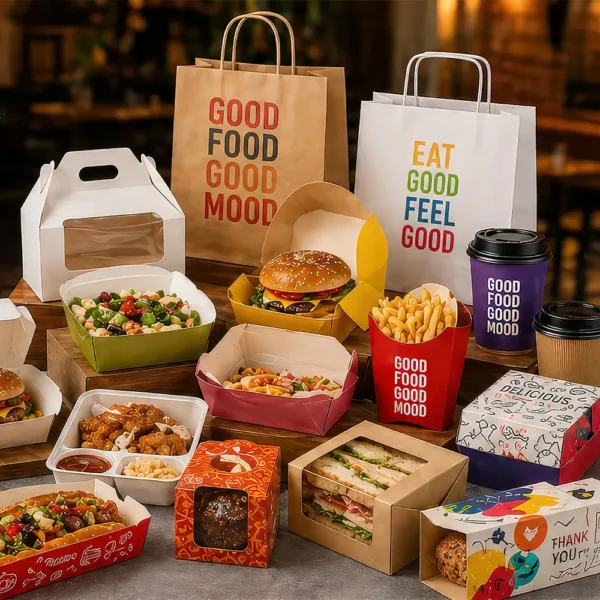
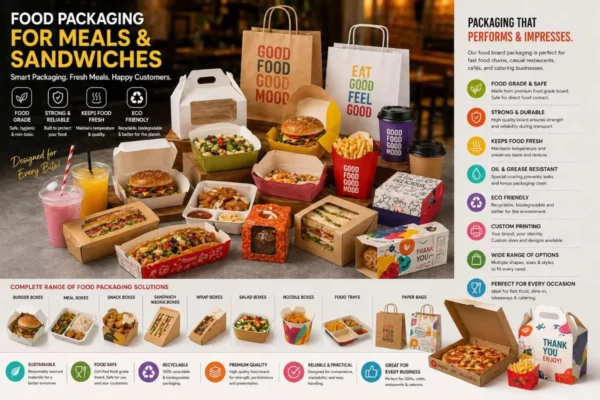
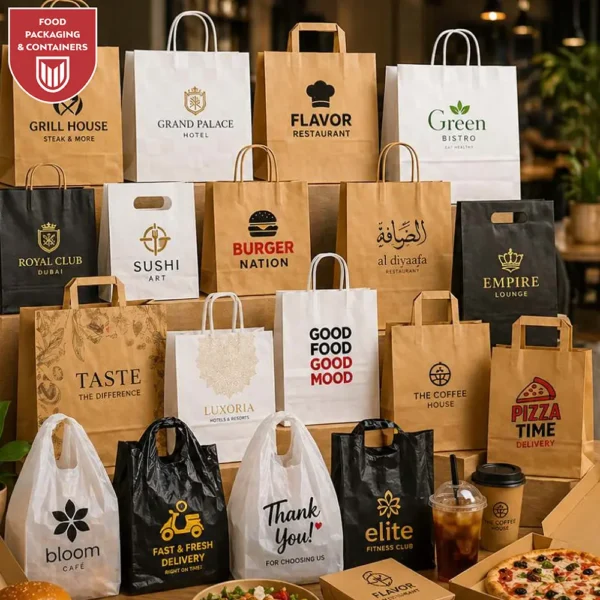
Premium Food Packaging for Meals & Sandwiches – Smart, Fresh, and Sustainable Solutions
Our food board packaging is designed for every bite, ensuring fresh meals and happy customers. Made from premium food-grade board, these strong and durable containers maintain food temperature and quality, making them perfect for fast food chains, cafes, and catering businesses.
The Eastern Province HORECA Market: What Makes It Different
The Eastern Province’s food service sector has three structural features that distinguish it from other Saudi regions:
- Corporate and industrial catering dominance: A disproportionate share of food service turnover in the Eastern Province comes from corporate dining — canteens, catering contracts for oil field facilities, offshore platform catering, and contractor camp operations. These buyers require consistent, high-volume, cost-efficient packaging that can be specified in tender documents and procured on annual contracts
- Expatriate and international population: The Eastern Province hosts one of Saudi Arabia’s highest concentrations of expatriate workers — South Asian, Southeast Asian, Western, and Arab expat communities with highly diverse cuisine preferences. This drives demand for a wider range of food packaging formats than a typical Saudi city, including portion sizes and container types suited to Asian cuisine
- King Abdulaziz Port (Dammam Port) access: Dammam is home to King Abdulaziz Port, the Kingdom’s primary Gulf coast commercial port. This gives Eastern Province operators a direct-import alternative to routing through Jeddah — critical for products sourced from the Gulf, India, or Southeast Asia where Gulf routing is more economical than Red Sea routing
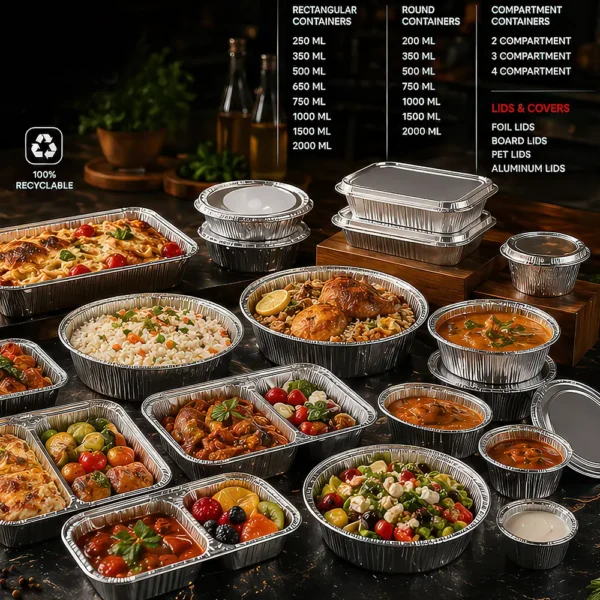
Food Grade Aluminum Food Containers – Smart Packaging for Maximum Performance
Our food-grade aluminum containers are designed to deliver safety, convenience, and reliability for every meal. Featuring superior strength and 100% recyclability, these containers provide an eco-friendly and professional solution for baking, freezing, and transporting food.
King Abdulaziz Port vs Jeddah Port: The Eastern Province Supply Chain Calculation
Unlike operators in Madinah or inland cities who must rely on Jeddah’s Red Sea port, Eastern Province buyers have a genuine choice between two major Saudi ports. The economics depend on product origin:
| Product Origin | Optimal Saudi Port | Routing Advantage | Approx. Freight Saving vs Alternative |
|---|---|---|---|
| China (primary foil container, cup, glove source) | Jeddah (Red Sea) or Dammam (Gulf) — roughly equal via Strait of Malacca | Marginal; Jeddah slightly faster | ±SAR 200–400 per FCL |
| India / Pakistan (cling film, gloves, paper products) | Dammam (King Abdulaziz Port) | Gulf of Oman routing is shorter | SAR 600–1,200 per FCL saving vs Jeddah |
| UAE / GCC regional suppliers | Dammam (overland via King Fahd Causeway or Gulf routing) | Significantly shorter distance | SAR 800–2,000 per FCL saving vs Jeddah routing |
| Turkey / Egypt (specialty packaging) | Jeddah (Red Sea) | Red Sea routing is substantially shorter | SAR 1,500–3,000 per FCL saving vs Dammam |
For Eastern Province operators sourcing from India, the Gulf states, or Southeast Asian suppliers who route via the Gulf of Oman, Dammam Port offers genuine freight savings and faster delivery times. For China-sourced products (the majority of disposable packaging), the two ports are roughly equivalent, and Jeddah’s more developed packaging distribution ecosystem may offer better local pricing.
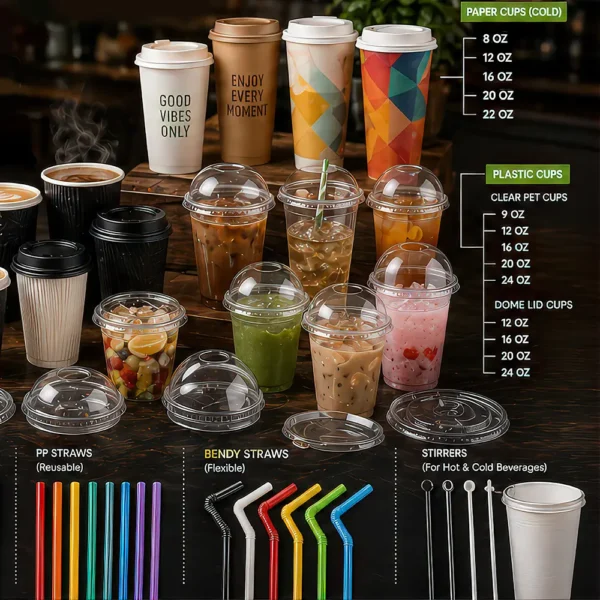
Premium Paper Cups, Plastic Cups & Straws – Smart Packaging, Sustainable Choice
Our responsibly designed cups and straws deliver convenience, hygiene, and sustainability with every sip. Made from premium food-grade materials, these durable and leak-resistant solutions are ideal for both hot and cold beverages in any professional setting.
Corporate Catering: The Backbone of Eastern Province Food Packaging Demand
Understanding the scale of industrial and corporate catering in the Eastern Province helps calibrate procurement strategy. Major demand centres include:
| Facility Type | Examples | Daily Covers (estimate) | Key Packaging Needs |
|---|---|---|---|
| Saudi Aramco campuses | Dhahran, Abqaiq, Ras Tanura, Khurais | 20,000–40,000 per campus | Institutional trays, bulk containers, cutlery sets |
| Jubail Industrial City | SABIC, SADAF, PetroRabigh contractors | 8,000–15,000 | Labour camp catering trays, bulk foil pans |
| Offshore platform catering | Arabian Gulf oil field support vessels | 500–2,000 per platform | High-durability packaging, sealed containers for helicopter delivery |
| Hospital and medical facilities | Aramco hospitals, King Fahd Specialist Hospital | 2,000–5,000 | HACCP-compliant, individually wrapped, labelled trays |
| Hotels (business travellers) | Sheraton, Hilton, Radisson Dammam | 400–1,200 per hotel | Full HORECA range; branded cups, quality containers |
SFDA Compliance in the Eastern Province
SFDA food contact material regulations apply uniformly across Saudi Arabia. Eastern Province operators should be particularly attentive to two region-specific compliance factors:
- Industrial catering audit standards: Saudi Aramco and major petrochemical companies apply their own internal food safety audit standards on top of SFDA baseline requirements. Catering contractors supplying these clients often need to demonstrate food packaging compliance that meets both SFDA FCM standards and the client company’s procurement policy — which may include ISO certification, traceability documentation, and environmental reporting
- High-temperature environment performance: The Eastern Province’s extreme summer heat (40–50°C ambient in June–September) places additional demands on food packaging. Containers used in outdoor industrial catering or uncooled delivery to remote facilities must perform at ambient temperatures that would cause standard LDPE containers to deform. PP containers rated to 120°C+ are generally required for hot-fill industrial catering applications in the region
Eastern Province Cost Benchmarks: Food Packaging (SAR)
| Product | Dammam Local Distributor (SAR) | Port-Direct / Direct Import (SAR) | Annual Saving (mid-volume operation) |
|---|---|---|---|
| PP institutional meal tray (1-comp, 500 ml) | 22–30 per 100 pcs | 13–18 per 100 pcs | SAR 18,000–36,000 (100k pcs/yr) |
| Aluminium foil catering pan (GN1/2) | 42–55 per 100 pcs | 24–32 per 100 pcs | SAR 36,000–69,000 (150k pcs/yr) |
| PVC gloves powder-free (100 pcs box) | 30–40 per box | 18–24 per box | SAR 36,000–64,000 (3,000 boxes/yr) |
| Disposable cutlery set (fork+knife+spoon) | 18–25 per 100 sets | 11–15 per 100 sets | SAR 14,000–28,000 (200k sets/yr) |
| 240-litre bin liners (25 pcs roll) | 28–38 per roll | 16–22 per roll | SAR 12,000–22,000 (1,000 rolls/yr) |
Weekend Leisure: Al-Khobar and the Gulf Waterfront Dining Scene
Al-Khobar’s Corniche waterfront and the broader weekend leisure economy create a secondary demand profile distinct from industrial catering. The Eastern Province has one of the highest rates of domestic tourism within Saudi Arabia — families from across the Kingdom drive or fly to Al-Khobar and Dammam for weekend breaks, particularly for Gulf seafood dining. This creates robust demand for:
- Takeaway seafood packaging (large containers suitable for whole fish, grilled shrimp by weight, and mixed seafood platters)
- Branded takeaway packaging for Al-Khobar’s growing café culture (coffee cups, dessert containers, branded bags)
- Outdoor event packaging for corniche food festivals and National Day events
- High-capacity containers for the region’s popular family-style communal dining format
Procurement Strategy Recommendations for Eastern Province HORECA
- Corporate catering contractors: Negotiate annual supply agreements with suppliers who can document compliance to both SFDA and client corporate procurement standards. Consider Dammam port routing for Indian-origin products to reduce freight costs
- Hotel F&B operators: Establish dual-sourcing — primary from a Dammam-based distributor for fast turnaround, secondary from a Jeddah port-direct importer for large quarterly orders of high-volume SKUs
- Industrial camp catering: Prioritise high-heat-tolerance PP containers and high-durability packaging that survives the logistics of remote site delivery in summer conditions
- Seafood restaurant operators: Source large-format containers and heavy-gauge foil trays suitable for wet, oil-heavy seafood packaging — standard containers are frequently inadequate for this application
Staff picks
-
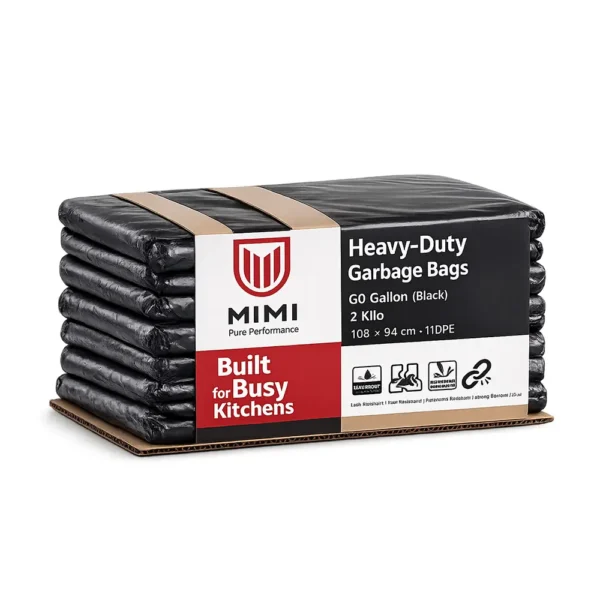
CoreShield™ Heavy-Duty Garbage Bags – 60 Gallon High-Performance Trash Liners (Flat Pack)
-
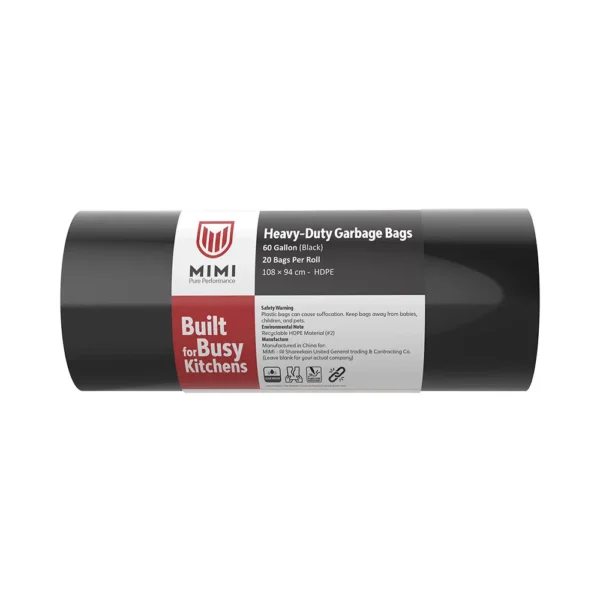
CoreShield™ Heavy-Duty Garbage Bags – High-Performance Trash Liners for Busy Kitchens
-
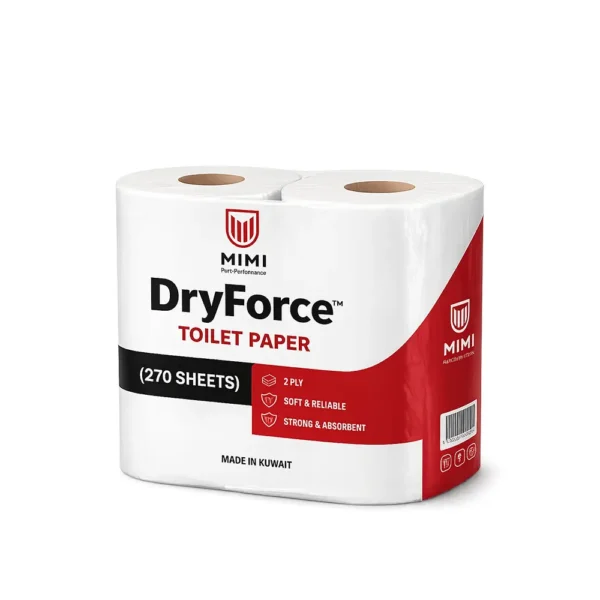
DryForce™ Premium 2-Ply Toilet Paper – Soft & Reliable Bathroom Tissue
-
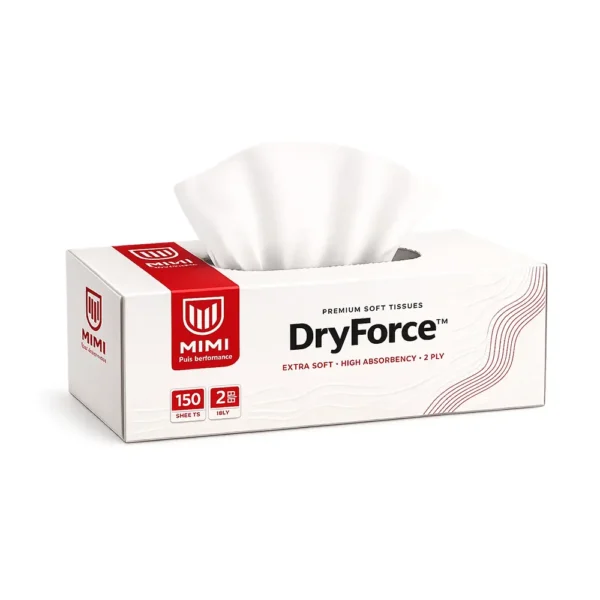
DryForce™ Premium Paper Soft Napkins – Extra Soft & High Absorbency 2-Ply Tissues
MIMI Pure Performance: Food Packaging Supply for Dammam & Eastern Province
MIMI Pure Performance supplies food packaging to catering contractors, hotel operators, industrial facility managers, and restaurant groups across Dammam, Al-Khobar, Jubail, and the broader Eastern Province. Our supply chain serves the region’s corporate catering sector with volume-appropriate pricing, industrial-spec product options, and SFDA FCM documentation tailored for Aramco and petrochemical client audit requirements.
Sourcing food packaging for industrial catering, hotel operations, or restaurant groups in Dammam and the Eastern Province? Contact MIMI Pure Performance — we understand the region’s specific demand profile and help buyers build efficient, compliant supply chains.