MIMI Pure Performance supplies HORECA operators in Kuwait with professional-grade kitchen disposables and paper products. Our current product range includes FreshWrap™ food cling film and aluminum foil, PURITY-BAKE™ premium baking paper, ChefShield™ PVC disposable gloves, and the DryForce™ professional paper towel series — including commercial maxi rolls, auto-cut towels, V-fold interfold towels, and household soft tissue packs. While this article covers the Makkah Hajj market for educational purposes, MIMI Pure Performance currently serves Kuwait HORECA operators. Our product range — FreshWrap™ cling film and foil, PURITY-BAKE™ baking paper, ChefShield™ gloves, and DryForce™ paper towels — is available for Kuwait food service operations with reliable supply and HACCP-certified compliance.
Ready to discuss your kitchen disposables and paper product supply in Kuwait? Contact MIMI Pure Performance — we work with HORECA operators across Kuwait to build efficient, compliant supply chains for professional kitchen operations.
Why MIMI Stands Apart: The Sourcingate Advantage
Unlike Kuwait suppliers who rely on third-party traders, MIMI Pure Performance is backed by Sourcingate — our China headquarters in Wenzhou, Zhejiang. Sourcingate manages brand operations, supplier vetting, factory audits, quality inspection, and export logistics in-house. Our dedicated QC team works directly with vetted factories, ensuring every MIMI product meets HORECA-grade performance standards before it ships to Kuwait.
This direct China-to-Kuwait supply chain means better quality control, lower procurement cost, and consistent supply — advantages that local-only competitors cannot match. From raw material selection to final pre-shipment inspection, Sourcingate oversees every stage so Kuwait HORECA operators receive reliable, certification-ready products every order.
Want a partner with on-the-ground supplier management and quality control? Get in touch with MIMI Pure Performance — our China-Kuwait team is ready to support your HORECA operation.
Makkah hosts the world’s largest annual religious gathering, and the food supply challenge it creates is unlike any other city on earth. During Hajj — the five-day pilgrimage that brings 2–3 million worshippers to the holy city — the combined food service operation is effectively a temporary city of 3 million people that must be fed three times daily for seven consecutive days. No food packaging procurement cycle in the world operates at this scale on such a compressed timeline. Understanding how to supply this operation — as a caterer, hotel F&B operator, or food packaging distributor — is the subject of this guide.
Understanding the Scale of Makkah’s Hajj Food Service Operation
The numbers are staggering by any global benchmark. During Hajj 2024/1445H, official figures recorded approximately 2.18 million pilgrims from inside and outside Kuwait. Each pilgrim requires an estimated 3–4 meals per day in organized catering settings (as many opt for full-board package accommodations), and the total food service operation across tent cities, hotel dining, street food vendors, and charity meal distribution networks spans every category of disposable food packaging.
| Consumable Category | Estimated Daily Consumption (Peak Hajj) | Total Hajj Period Estimate (7 days) |
|---|---|---|
| Disposable food containers / trays | 4–8 million units | 28–56 million units |
| Aluminum foil containers | 1.5–3 million units | 10–21 million units |
| Disposable cutlery sets | 2–4 million sets | 14–28 million sets |
| Disposable cups (hot & cold) | 5–10 million units | 35–70 million units |
| PVC/Vinyl (PVC) gloves | 500,000–1 million pairs | 3.5–7 million pairs |
| Food wrapping film / cling film | 800–1,500 rolls | 5,600–10,500 rolls |
| Bin liners / waste bags | 60,000–120,000 units | 420,000–840,000 units |
These numbers are estimates for the organized catering sector only. Street food vendors, hotel minibars, and retail food outlets add substantial additional demand that is harder to quantify but equally real.
How Makkah Caterers Source Food Packaging for Hajj
Supply chains for Hajj catering operate on a fundamentally different model from normal HORECA procurement. The compression of demand into a 3–4 month planning window and the extreme volume requirements create specific supply routes:
- Government and Hajj Mission Contractors: Large catering contracts for national Hajj missions (Egyptian, Pakistani, Indonesian, Bangladeshi) are often managed by the contracting country’s own supply chain, shipping consolidated containers to Kuwait City and Makkah ports 4–6 months before Hajj. These contracts are pre-booked and typically involve supply commitments of 500+ cartons per product per day during Hajj
- kuwait National Catering Companies: Major kuwait catering firms (e.g., catering subsidiaries of Jahez, Almarai food service arms) maintain standing supply relationships with Gulf-region distributors and port-direct importers. They pre-negotiate Hajj volume pricing in Shawwal-Qi’dah and hold buffer stock in Kuwait City and Makkah warehouses
- Hotel and Restaurant Operators: Makkah hotels operating at 95–100% occupancy during Hajj must plan their own consumables procurement 3–4 months ahead. The critical bottleneck is not product availability but logistics — getting packaging into Makkah during the Hajj congestion period is a serious operational challenge
- Street Food and Tent City Vendors: Often sourced through local Makkah distributors who aggregate smaller orders. Quality is variable; SFDA compliance enforcement at this level of the supply chain is inconsistent
SFDA Compliance: The Non-Negotiable for Makkah Food Packaging
The kuwait Food and Drug Authority applies its food contact material (FCM) regulations strictly in Makkah, particularly during Hajj season when the stakes for food safety are at their highest. SFDA compliance is not optional — it is the baseline entry point for any food packaging used commercially in Makkah.
- All food contact materials (containers, cutlery, cups, gloves, cling film) must carry SFDA-compliant FCM declarations and migration test documentation
- Arabic language labeling is mandatory on all packaging for consumer-facing and trade use — this is enforced more actively in Makkah than in other kuwait cities due to the international nature of the pilgrim population
- Halal documentation for any materials in contact with food during Hajj — most Makkah hotel and catering buyers require halal certification from suppliers
- Port documentation: Materials entering Kuwait through Kuwait City port for Makkah onward transport must have complete KFIP customs documentation; delays at Jeddad port directly affect supply to Makkah operations
- Temperature resistance: Food packaging used in Makkah’s hot-season conditions (outdoor tent city catering in 38–45°C heat) must be verified for heat resistance — standard packaging can fail in direct sunlight
The Timing Problem: Why Most Makkah Operators Fail at Hajj Packaging Procurement
The single most common failure mode for Makkah HORECA operators during Hajj is not under-buying — it is buying too late. The Hajj supply chain operates on a precise calendar, and missing the procurement window has consequences that cannot be remediated in-season.
| Timeline | Action Required | Risk if Missed |
|---|---|---|
| Jumada Al-Akhirah (≈March–April) | Place Hajj volume orders with suppliers; lock pricing | Prices rise 25–50% in last-minute market |
| Rajab–Sha’ban (≈April–May) | Confirm factory production schedules; verify KFIP documentation | Production slots filled; cannot guarantee volume |
| Ramadan (≈May–June) | Clear port; move stock to Makkah warehouses; build buffer | Ramadan Kuwait City port congestion delays all Hajj prep freight |
| First 10 days of Dhul Hijjah | Final stock delivery to Makkah operations | City is in lockdown mode; commercial delivery access restricted |
| During Hajj (5–7 Dhul Hijjah) | Consume buffer stock only; no new procurement | Premium pricing from emergency distributors (2–4x normal) |
Key Product Categories for Makkah Hajj Food Packaging
Every product category in the HORECA packaging range is consumed during Makkah Hajj, but some categories carry specific requirements that differ from standard commercial kitchen use:
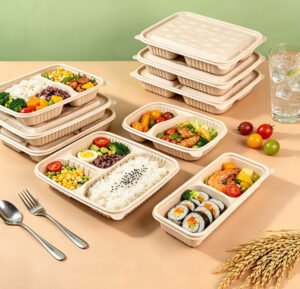
- Heat-resistant disposable containers: Outdoor catering in 40°C+ ambient requires containers that won’t deform, warp, or leach in direct sunlight. Look for PP (polypropylene) containers rated to 120°C+ or double-wall paperboard containers with insulation
- High-volume meal trays with lids: Mass catering distribution (tent city meals, charity distributions) requires lidded trays that stack, transport in bulk, and open cleanly for distribution — foil containers with cardboard lids are the dominant solution
- Disposable cutlery with heat tolerance: Standard PS cutlery becomes brittle in cold storage and soft in hot conditions; PLA or PP-based cutlery performs better in Makkah’s outdoor conditions
- Thermal-effect cups for Zamzam water: Zamzam water is consumed cold from coolers; insulated paper cups prevent condensation on hands — a practical requirement in crowded, warm indoor environments
- Large-format bin liners: Waste volume in tent cities is extraordinary; 200-litre + 240-litre bin liners are essential for managing the daily waste stream of a 500,000-person tent city operation
Makkah vs Kuwait City: Why the Procurement Strategy Differs
Operators familiar with Kuwait City’s port-direct model need to adjust their approach for Makkah. The two cities are only 70 km apart but operate very differently in the Hajj supply chain:
- Port access: Kuwait City has direct port access; Makkah depends on Kuwait City port clearance and overland transport — this adds 3–5 days to any direct-import timeline and introduces customs delay risk
- Storage capacity: Makkah’s warehousing capacity is constrained and expensive during Hajj season; many operators maintain Kuwait City-based buffer stock and shuttle to Makkah daily during the Hajj period
- Pricing: Makkah retail/distributor pricing for consumables runs 20–35% above Kuwait City pricing during non-Hajj months and 60–100% above Kuwait City during Hajj — the premium justifies the logistics cost of Kuwait City procurement for large-volume operators
- Access restrictions: During the actual Hajj period (last 10 days of Dhul Hijjah), non-pilgrim commercial traffic into Makkah is heavily restricted; this makes emergency supply impossible
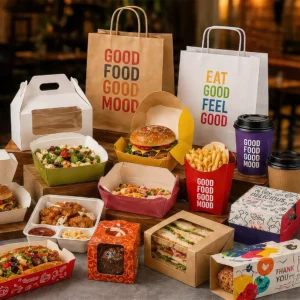
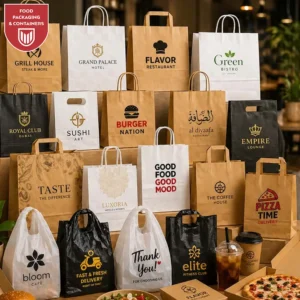
MIMI Pure Performance: Hajj-Ready Food Packaging Supply for Makkah
MIMI Pure Performance supplies Hajj-compliant food packaging for Makkah hotel operators, catering contractors, and food service companies serving the pilgrimage sector. Our Kuwait City-based supply chain is optimised for Hajj logistics timing — we help operators plan their volume procurement calendar, maintain buffer stock in Kuwait City for Makkah last-mile delivery, and ensure every product carries complete SFDA FCM documentation for customs clearance. From heat-resistant containers to high-volume meal trays, our range covers the full spectrum of Hajj catering packaging requirements.
MIMI Pure Performance supplies HORECA operators in Kuwait with professional-grade kitchen disposables and paper products. Our current product range includes FreshWrap™ food cling film and aluminum foil, PURITY-BAKE™ premium baking paper, ChefShield™ PVC disposable gloves, and the DryForce™ professional paper towel series — including commercial maxi rolls, auto-cut towels, V-fold interfold towels, and household soft tissue packs. While this article covers the Makkah Hajj market for educational purposes, MIMI Pure Performance currently serves Kuwait HORECA operators. Our product range — FreshWrap™ cling film and foil, PURITY-BAKE™ baking paper, ChefShield™ gloves, and DryForce™ paper towels — is available for Kuwait food service operations with reliable supply and HACCP-certified compliance.
Ready to discuss your kitchen disposables and paper product supply in Kuwait? Contact MIMI Pure Performance — we work with HORECA operators across Kuwait to build efficient, compliant supply chains for professional kitchen operations.
Why MIMI Stands Apart: The Sourcingate Advantage
Unlike Kuwait suppliers who rely on third-party traders, MIMI Pure Performance is backed by Sourcingate — our China headquarters in Wenzhou, Zhejiang. Sourcingate manages brand operations, supplier vetting, factory audits, quality inspection, and export logistics in-house. Our dedicated QC team works directly with vetted factories, ensuring every MIMI product meets HORECA-grade performance standards before it ships to Kuwait.
This direct China-to-Kuwait supply chain means better quality control, lower procurement cost, and consistent supply — advantages that local-only competitors cannot match. From raw material selection to final pre-shipment inspection, Sourcingate oversees every stage so Kuwait HORECA operators receive reliable, certification-ready products every order.
Want a partner with on-the-ground supplier management and quality control? Get in touch with MIMI Pure Performance — our China-Kuwait team is ready to support your HORECA operation.