
Jeddah occupies a unique position in Saudi Arabia’s HORECA supply chain that most operators in other cities simply do not have access to: the Islamic Port of Jeddah is the Kingdom’s primary Red Sea gateway, handling over 60% of Saudi Arabia’s non-oil imports. For food service operators headquartered in or near Jeddah, this port proximity creates a structural sourcing advantage that — when leveraged properly — can reduce packaging procurement costs by 20–35% compared to operators in Riyadh, who must absorb inland freight costs on top of landed port prices.
Jeddah’s HORECA Market: Tourism, Pilgrimage and the Red Sea Project
Jeddah’s food service market is shaped by forces that are genuinely unlike any other city in the GCC. The combination of Hajj and Umrah pilgrimage proximity, Vision 2030’s Red Sea tourism development, and Jeddah’s established status as Saudi Arabia’s most cosmopolitan city creates a HORECA sector that is simultaneously traditional and rapidly modernising.
- Hajj and Umrah catering: Approximately 2 million pilgrims perform Hajj annually, and Umrah visitors have exceeded 13 million per year since the post-pandemic reopening. A significant proportion pass through Jeddah, generating massive short-duration catering demand for hotels, restaurants, and catering companies serving pilgrimage groups. Packaging consumption during Hajj season rivals Ramadan in intensity.
- Red Sea Project spillover: NEOM’s Red Sea Project, Amaala, and Sindalah island developments are driving hotel construction along the Red Sea coast north of Jeddah. Many of these properties will source their HORECA consumables through Jeddah-based distributors or direct port clearance — a market that is currently forming and offers first-mover advantages for well-positioned suppliers.
- Historic Jeddah (Al-Balad) F&B: UNESCO World Heritage status has catalysed a food and beverage renaissance in Jeddah’s historic district, with boutique hotels, heritage restaurants, and artisan café concepts driving demand for premium presentation packaging.
- Corniche and waterfront dining: Jeddah’s Corniche district hosts a high concentration of seafood restaurants and casual dining outlets serving Saudi and expatriate diners. The outdoor dining culture — year-round on the Red Sea coast — drives strong demand for weather-resistant packaging formats.
The Jeddah Port Advantage: How to Use It for Packaging Procurement
The Islamic Port of Jeddah handles container freight from China, India, Turkey, and Europe — the primary origins for commercial food packaging. Containers clear Jeddah customs in 3–7 days under normal conditions (longer during peak Hajj season). For operators with sufficient volume to justify direct import, the logistics economics are straightforward:
| Cost Factor | Jeddah Direct Import | Riyadh Direct Import | Jeddah Advantage |
|---|---|---|---|
| Sea freight (20ft container from China) | USD 1,100 – 1,600 | USD 1,100 – 1,600 + SAR 2,500 inland | SAR 2,500 saving per container |
| Customs clearance agent | SAR 800 – 1,200 | SAR 800 – 1,200 | Equal |
| Port-to-warehouse transit | SAR 200 – 400 | SAR 1,800 – 2,800 (Jeddah→Riyadh truck) | SAR 1,400 – 2,400 saving |
| Total logistics per container | SAR 3,000 – 4,200 | SAR 6,100 – 8,000 | SAR 3,100 – 3,800 saving |
For a hotel group running three Jeddah properties and importing two 20ft containers of packaging consumables per year, port proximity alone saves SAR 6,000–7,600 annually — before even accounting for the unit cost benefits of direct-import pricing versus local distributor margins.
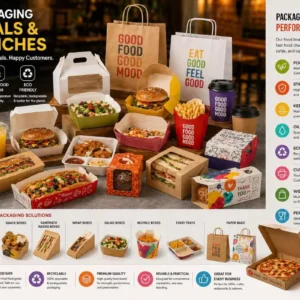
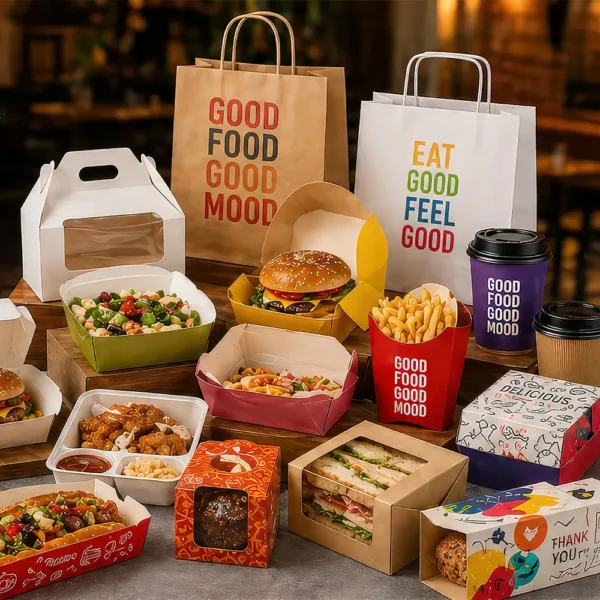
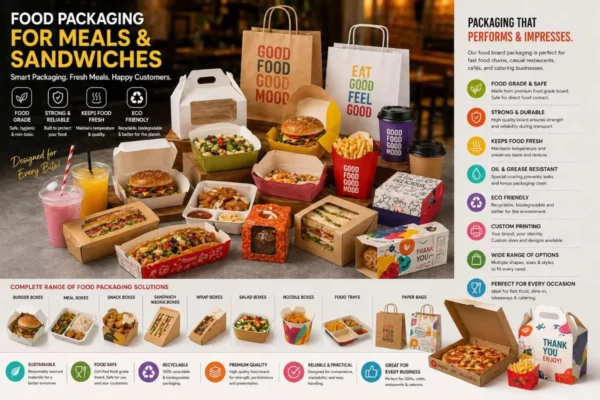
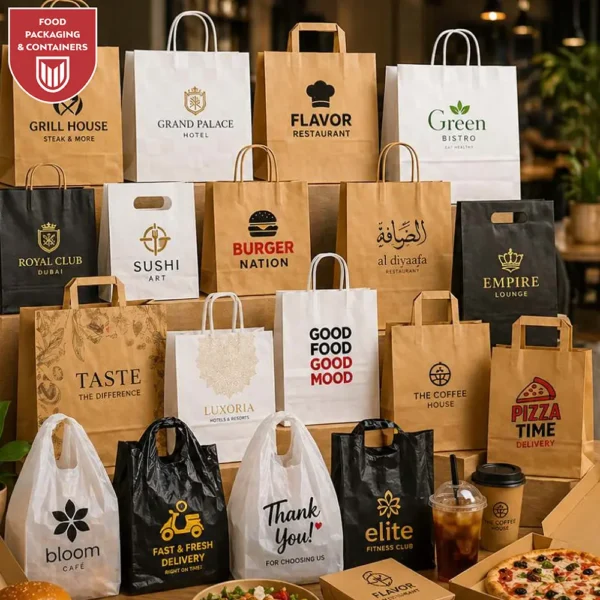
Premium Food Packaging for Meals & Sandwiches – Smart, Fresh, and Sustainable Solutions
Our food board packaging is designed for every bite, ensuring fresh meals and happy customers. Made from premium food-grade board, these strong and durable containers maintain food temperature and quality, making them perfect for fast food chains, cafes, and catering businesses.
SFDA Compliance and Jeddah Port Documentation
All food-contact packaging imported through Jeddah Port must comply with SFDA requirements, and clearance agents will require specific documentation to process shipments through the KFIP (King Fahd Islamic Port) clearance system:
- Certificate of Analysis (CoA): Required for all food-contact materials, showing compliance with applicable migration limits and material safety standards.
- SFDA product registration number (where applicable): Increasingly required for direct food-contact materials under SFDA’s eServices registration programme.
- Halal certificate (where applicable): Required for packaging using organic dyes, adhesives, or coatings that may contain animal-derived components.
- Commercial invoice with HS codes: Accurate classification prevents delays at customs and ensures correct duty assessment.
MIMI Pure Performance provides a complete documentation pack with every shipment — CoA, food contact compliance certificates (FDA/EU standard), material safety data sheets, and Halal certification where applicable. This pre-packaged documentation set is designed to clear Saudi customs without back-and-forth requests, reducing port dwell time and the risk of demurrage charges.
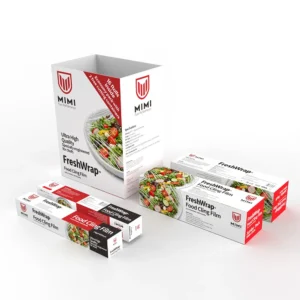
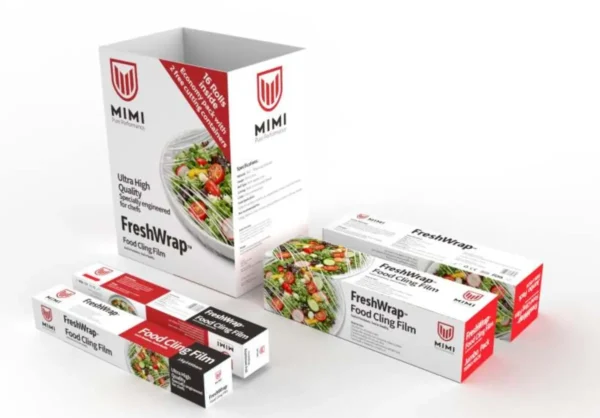
FreshWrap™ Food Cling Film Supplies Kuwait
-
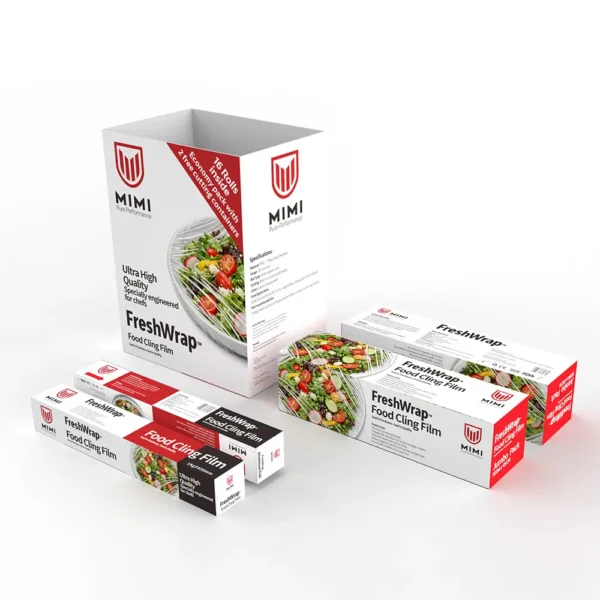
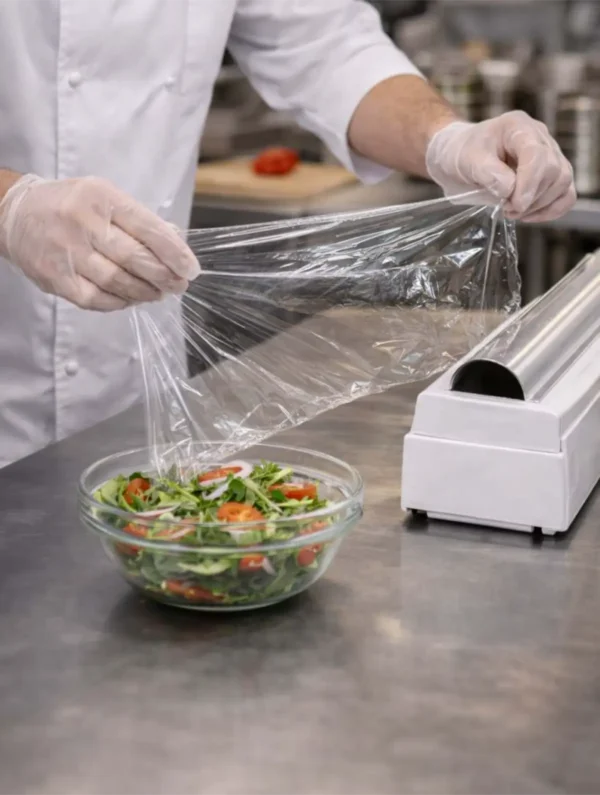
Taglines: “Seal in Freshness. Seal in Quality.” and “Ultra High Quality. Specially engineered for chefs”.
-
Key Benefits:
-
Clings tightly to plates, bowls, and containers.
-
High clarity for easy food identification.
-
Locks in freshness and prevents odors.
-
Durable stretch for professional use.
-
Ideal for refrigerated and room-temperature storage.
-
Perfect for restaurants, hotels, catering, and home kitchens.
-
Key Packaging Products for Jeddah HORECA Operations
Jeddah’s specific HORECA environment — pilgrimage catering at scale, seafood-heavy restaurant menus, high-humidity coastal climate, and a growing luxury hospitality sector — creates particular demand across several product categories:
- FreshWrap™ Aluminium Foil Containers: The dominant packaging format for Jeddah’s pilgrimage group catering, hotel banquet service, and the large-format iftar catering that is central to the city’s food culture. Available in full GCC standard sizing, including the large rectangular formats preferred for Saudi communal dining service.
- ChefShield™ PVC gloves: Jeddah’s seafood restaurant sector — one of the most active in Saudi Arabia — requires food-safe gloves that resist fish proteins and oils without degrading. Vinyl (PVC) outperforms PE and vinyl in seafood preparation environments significantly.
- DryForce™ Maxi Roll: High-volume kitchen paper consumption in Jeddah’s large hotel properties, particularly those operating Hajj-season overflow catering. DryForce™ multi-layered tissue provides the absorption performance required for high-throughput kitchen environments.
- PURITY-BAKE™ Baking Paper: Jeddah’s growing artisan bakery and café sector, concentrated in the Al-Hamra, Obhur, and Al-Balad districts, drives consistent demand for professional silicone-coated baking paper for croissant, pastry, and bread production.
Jeddah’s port access is a genuine procurement advantage — MIMI Pure Performance can help you use it. Our team handles the full documentation process for Saudi customs clearance and can coordinate direct delivery to your Jeddah warehouse. Contact us to request samples, compliance documentation, and a port-delivered price comparison for your operation.
While this article covers the Jeddah market for educational purposes, MIMI Pure Performance currently serves Kuwait HORECA operators. MIMI Pure Performance supplies HORECA operators in Kuwait with professional-grade kitchen disposables and paper products: FreshWrap™ food cling film and aluminum foil, PURITY-BAKE™ premium baking paper, ChefShield™ PVC disposable gloves, and the DryForce™ professional paper towel series — including commercial maxi rolls, auto-cut towels, V-fold interfold towels, and household soft tissue packs.
Ready to discuss your kitchen disposables and paper product supply in Kuwait? Contact MIMI Pure Performance — we work with HORECA operators across Kuwait to build efficient, compliant supply chains.