Introduction: Why Your Kitchen Consumables Choice Matters
In the fast-paced world of commercial kitchens, the right consumables aren’t just supplies — they’re the difference between a smooth service and a chaotic one. Whether you’re running a boutique café, a hotel banquet kitchen, or a high-volume restaurant, the consumables you choose directly impact food safety, operational efficiency, and ultimately your bottom line.
This comprehensive buying guide covers everything you need to know about selecting, sourcing, and managing commercial kitchen consumables in 2026 — from disposable gloves and food packaging to kitchen consumables and paper products.
What Are Commercial Kitchen Consumables?
Commercial kitchen consumables are single-use or regularly replaced items essential to daily kitchen operations. Unlike equipment (which lasts years), consumables are used and replenished continuously. They fall into five major categories:
- Kitchen Disposables — gloves, cling film, aluminum foil, baking paper
- Food Packaging & Containers — takeaway boxes, cups, straws, meal packaging
- Paper & Tissue Products — paper towels, napkins, toilet paper, garbage bags
- Cleaning & Sanitation Supplies — food wrap, aluminum foil, sanitizers
- Facility Management Consumables — pest control products, professional cleaning agents
Category 1: Kitchen Disposables — The Frontline of Food Safety
Disposable Gloves: PE, Vinyl, Vinyl (PVC) — Which One Do You Need?
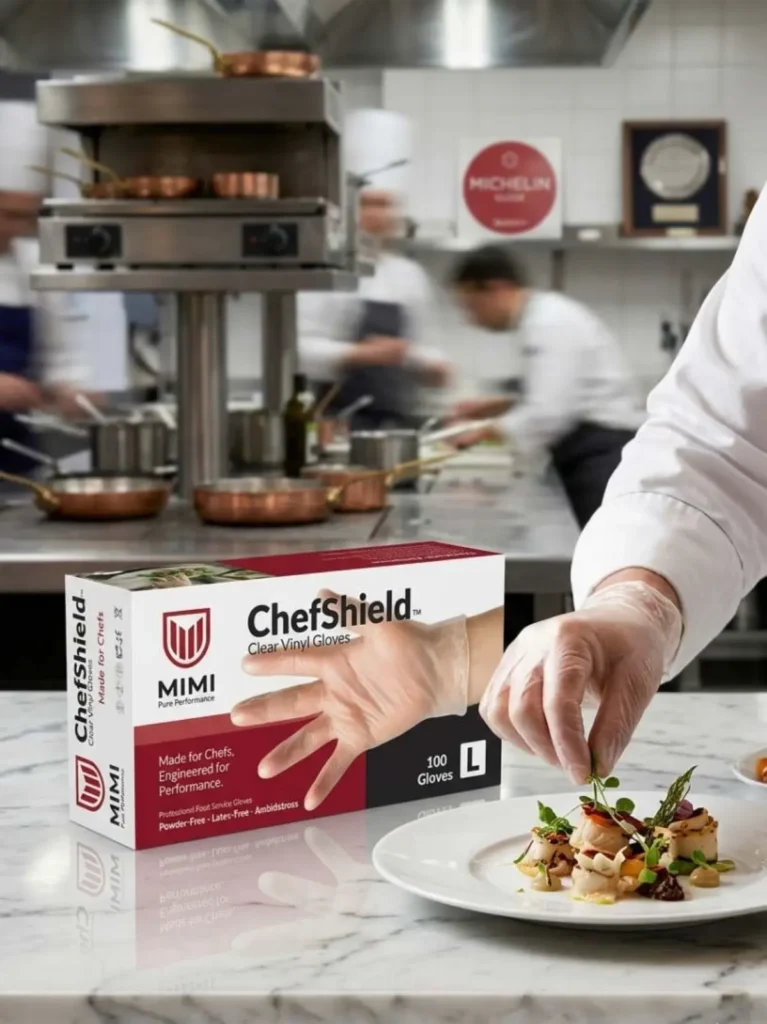
Gloves are your kitchen’s first line of defense against contamination. Choosing the wrong type wastes money and compromises safety. Here’s a quick breakdown:
| Glove Type | Best For | Key Advantage | Limitation |
|---|---|---|---|
| PE (Polyethylene) | Light food handling, deli counters | Ultra-low cost, loose fit for quick changes | Minimal puncture resistance |
| Vinyl (PVC) | General food service, multi-use | Latex-free, comfortable for extended wear | Lower elasticity than PVC |
| Vinyl (PVC) | Heavy prep, dish washing, chemical handling | Superior puncture/chemical resistance | Higher cost per pair |
MIMI Pure Performance Recommendation: For HORECA operations, ChefShield™ Vinyl Gloves offer the optimal balance of food-grade safety, comfort for extended wear, and cost-effectiveness. Available in Black, Clear, and Blue (100 gloves/box) in M/L/XL sizes — color coding helps separate roles like raw meat handling vs. ready-to-eat prep.
Food Cling Film: What Thickness Actually Matters?
Not all cling film is created equal. For commercial kitchens, the key specs to look for are:
- Thickness: 10-15 microns is standard for professional use. Too thin = tears mid-wrap; too thick = unnecessary cost
- Roll width: 45cm is the HORECA industry standard — wide enough to cover gastronorm pans
- Core design: Built-in serrated cutters save time during busy service
- Cling strength: Must seal tightly without additional tape for refrigeration storage
FreshWrap™ Food Cling Film (45cm x 100m) features a hidden built-in cutter and high-transparency PVC film — ideal for labeling and identifying stored food instantly. For high-volume kitchens, the 45cm x 500m format reduces roll changes during service.
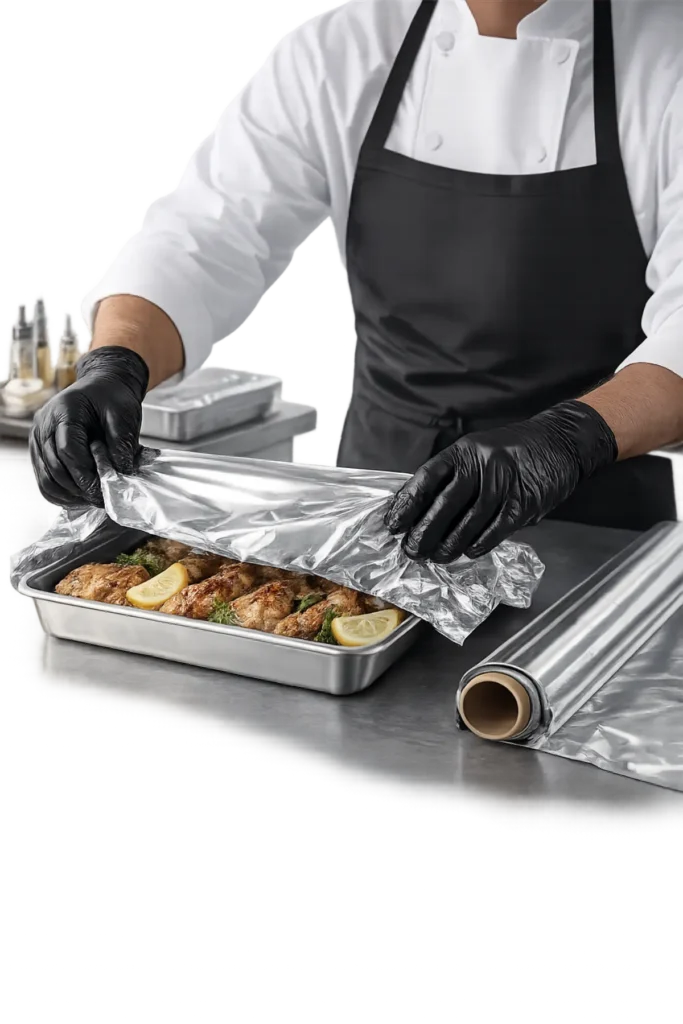
Aluminum Foil: Heavy-Duty vs Standard — When to Use Which
Aluminum foil in commercial kitchens serves multiple functions: wrapping for oven cooking, food storage, protecting sheet pans, and keeping food warm during transport.
- Standard foil (30cm): Ideal for smaller items, individual portions, and table-side presentation
- Wide foil (45cm): Covers full gastronorm trays and large roasting pans in one piece — reduces waste and re-wrapping time
- Heavy-duty foil: Essential for high-temperature oven cooking (above 200C) and BBQ/grill applications
Pro tip for bulk purchasing: FreshWrap™ Aluminum Foil comes in 6 size variants (25m to 65m rolls) — stock the 65m format for daily use to minimize storage interruptions during peak service.
Baking Paper: The Hidden Efficiency Tool
Professional baking paper is not just about non-stick performance — in a commercial kitchen, it is a time and cost saver:
- Eliminates pan greasing time (saves 2-3 minutes per batch)
- Reduces pan washing between batches — just swap the paper
- Prevents flavor transfer between consecutive bakes
- Compostable options align with sustainability goals
PURITY-BAKE™ Premium Baking Paper is rated to 230°C (446°F), unbleached, and available in precut 60cmx40cm sheets (1,000/box) or continuous rolls — perfect for standardizing portion sizes in pastry and bakery operations.
Category 2: Food Packaging and Containers — Getting It Right for Takeaway
In 2026, food packaging is no longer just functional — it is a brand statement and a sustainability commitment. Here is how to choose smartly:
Plastic Containers: The Complete Spec Checklist
When selecting microwavable plastic containers for your operation, verify these specifications:
- BPA-free food grade material
- Microwave-safe (check for PP #5 or specific ratings)
- Leak-proof lid seal (critical for delivery orders)
- Stackable design (saves 30-40% storage space)
- Freezer-safe (enables meal prep and batch cooking)
- Grease-resistant (essential for oily or saucy dishes)
MIMI’s container range covers 250ML to 2,000ML in rectangular, round, and compartmented formats — from the compact RC hinge-lid boxes for sauce portions to the RM rectangular series for full meal trays.
eco-friendly alternatives: Is the Premium Worth It?
Sugarcane fiber (bagasse) containers have become a mainstream choice in sustainability-conscious HORECA operations. The real question: when does the higher unit cost make business sense?
When eco-friendly alternatives make sense:
- Your customer base actively values eco-credentials (premium cafes, hotel restaurants)
- Local regulations restrict single-use plastics (EU, UK, parts of GCC)
- You serve hot foods that benefit from microwave-safe up to 120°C
- Marketing ROI justifies the 15-25% unit cost premium
When standard plastic is still the right call:
- High-volume, cost-sensitive delivery kitchens where margin is tight
- Cold food storage where sugarcane’s moisture absorption could be an issue
- Markets where eco-packaging does not yet command a price premium
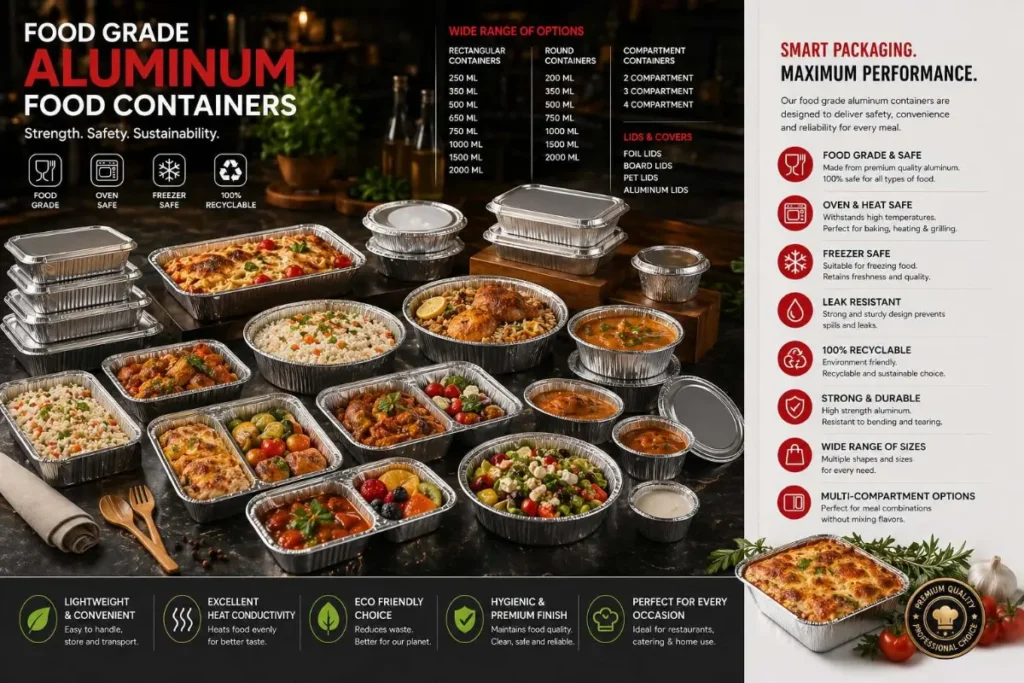
Aluminum Containers: The Catering and Hotel Choice
For hotel banquets, large-scale catering, and airline meal services, aluminum containers remain the professional standard because:
- Oven-to-table functionality (no transfer needed)
- Withstands temperatures from -20°C (freezing) to 250°C (oven baking)
- 100% recyclable — aligns with hotel sustainability reporting
- Professional presentation with multiple lid options (foil, board, PET, aluminum)
Cups and Straws: Matching Volume to Purpose
The single biggest purchasing mistake in beverage service: mismatching cup size to drink type. Here is the HORECA standard guide:
| Cup Type | Size Range | Ideal Application |
|---|---|---|
| Hot paper cups | 4-20 OZ | Espresso (4oz), standard coffee (8oz), large lattes (12-16oz) |
| Cold paper cups | 8-22 OZ | Iced beverages, cold brew, sparkling drinks |
| PET transparent cups | 9-24 OZ | Bubble tea, smoothies, dessert drinks requiring visual appeal |
| Dome lid cups | 12-24 OZ | Whipped cream drinks, layered dessert beverages |
Straw selection: Match to your sustainability policy — paper straws for eco-conscious venues, PLA compostable for premium positioning, PP reusable for dine-in settings.
Category 3: Paper and Tissue Products — Calculating True Cost Per Use
Paper products are where HORECA businesses consistently overspend due to poor format selection. The key metric is not the price per roll — it is the cost per sheet used.
Paper Towels: The Maxi Roll vs Auto-Cut Decision
| Format | Best Environment | Cost Control |
|---|---|---|
| Maxi Roll (135-350m) | Kitchen prep areas, heavy use | Low — staff tear inconsistent lengths |
| Auto Cut (100-150m) | Washrooms, portion-controlled areas | High — consistent sheet length = predictable usage |
| Interfold V-Fold | Table service, front-of-house | High — one-at-a-time dispensing |
DryForce™ Professional Series covers all three formats with consistent 2-ply quality — buy in bulk (6-roll bundles) to reduce per-unit cost by 18-25% versus smaller pack sizes.
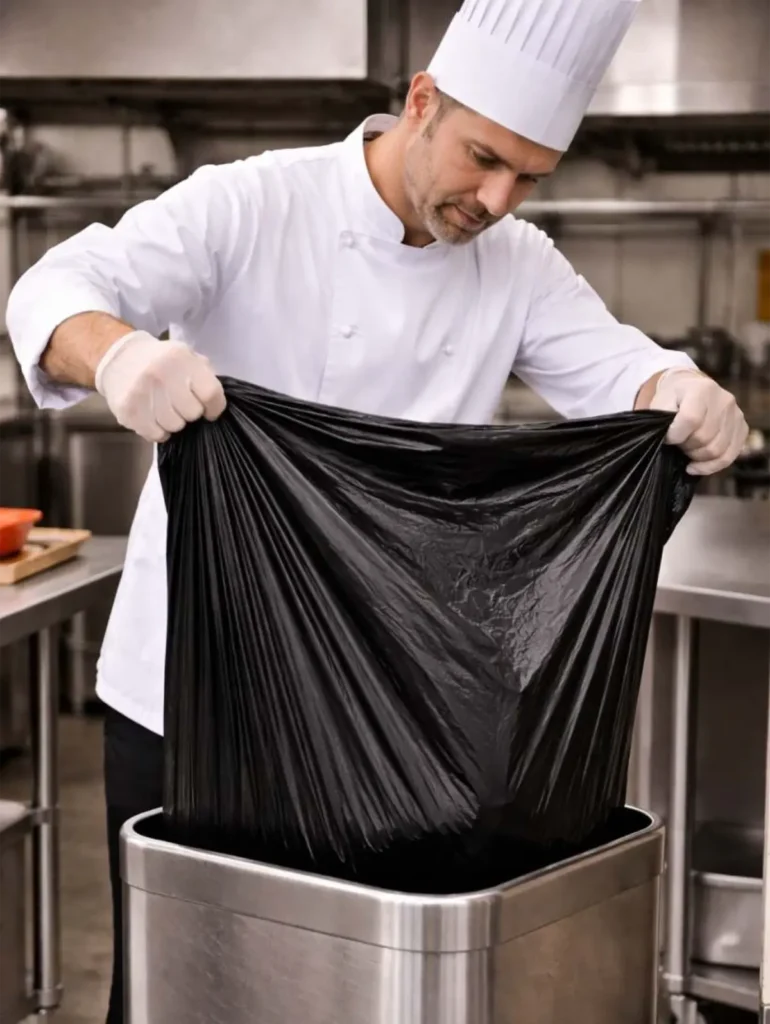
Garbage Bags: Matching Bag to Bin
Using undersized or under-strength garbage bags in a commercial kitchen is not just inefficient — it is a food safety risk. Torn bags mean contamination. Here is the matching guide:
- Kitchen food waste bins: Minimum 2-3mil LLDPE — the weight of wet food waste demands tear resistance
- Front-of-house / washrooms: Standard HDPE is sufficient for lighter waste
- Bulk waste / construction debris: Heavy LDPE 5-6mil for large-volume disposal
Color-code your waste streams with CoreShield™ multi-color bags — this is an HACCP requirement in many jurisdictions and helps staff sort general waste, food waste, recyclables, and hazardous waste without confusion.
Category 4: Cleaning and Sanitation — The HACCP Compliance Essentials
Post-COVID, cleaning and sanitation standards in commercial kitchens have been permanently elevated. A proper sanitation program requires specific products for each surface type:
| Surface/Area | Product Type | Key Requirement |
|---|---|---|
| Food prep counters | Food-safe food wrap | NSF-certified, no rinse required |
| Ovens and grills | Heavy-duty oven degreaser | Cut baked-on carbon without damaging surfaces |
| Floors | paper towels/degreaser | Anti-slip formulation critical for kitchen safety |
| Glass/windows | Streak-free cling film | No residue for food safety compliance |
| Staff hands | disposable gloves | Minimum 70% alcohol, food-safe formula |
MIMI Pure Performance’s cleaning range is formulated specifically for HORECA environments — meeting HACCP compliance standards and food-safe certifications required for professional kitchen operations.
How to Build a Commercial Kitchen Consumables Budget
Effective consumables management is not about buying the cheapest products — it is about total cost of use. Here is a framework for HORECA purchasing managers:
Step 1: Audit Your Current Usage
- Track daily/weekly consumption of each consumable category
- Identify your top 10 highest-spend items
- Calculate cost-per-cover (consumable cost divided by daily covers served)
Step 2: Consolidate Suppliers
Working with 5-8 different suppliers for consumables typically increases total cost by 15-30% due to fragmented ordering, losing volume discount thresholds, and inconsistent delivery scheduling. A single HORECA-specialist partner covering gloves, packaging, paper, and cleaning can consolidate orders and unlock better pricing through volume commitments.
Step 3: Standardize SKUs
Avoid “purchasing drift” — where staff order slightly different versions of the same product each time. Standardizing to a defined SKU list for each category ensures consistent food safety compliance, predictable storage requirements, easier staff training, and better negotiating leverage with your supplier.

2026 Trends Shaping Commercial Kitchen Consumables
1. Mandatory Plastic Reduction Regulations
The EU Single-Use Plastics Directive, UK plastics packaging tax, and GCC sustainability mandates are pushing operators to transition away from specific plastic formats. In 2026, this primarily affects expanded polystyrene (EPS) containers (banned in EU and several GCC countries), plastic cutlery (restricted in EU food service), and certain single-use plastic bags.
2. Compostable Packaging Going Mainstream
Sugarcane and PLA-based packaging is no longer a premium niche — it is becoming a baseline expectation in premium HORECA. The cost gap between compostable and conventional plastic has narrowed to 15-25% in 2026, down from 40-60% in 2022.
3. Digital Procurement Integration
Major hotel chains and restaurant groups are moving consumables procurement onto integrated digital platforms — requiring suppliers to offer consistent product codes, digital invoicing, and real-time stock visibility.
4. Hygiene-Forward Design
Post-pandemic kitchen design now emphasizes single-touch dispensing for paper products, individually wrapped straws, and pre-portioned packaging formats to minimize cross-contamination during service.
Finding the Right HORECA Consumables Partner
The best consumables partnerships are built on more than product lists. When evaluating suppliers, assess these five dimensions: product depth (can one partner cover your gloves, packaging, paper, and cleaning needs?), HACCP certification, consistency (same specification every order), supply reliability, and sustainability alignment.
MIMI Pure Performance — Built for Kitchens. Trusted by Professionals. As a HACCP-certified HORECA consumables specialist, we supply the full range covered in this guide — from ChefShield™ gloves to FreshWrap™ packaging solutions, DryForce™ paper products, CoreShield™ waste management, and professional sanitation supplies. We do not offer everything. We offer what works.
Ready to consolidate your kitchen consumables supply? Contact our HORECA specialists for a customized audit of your current usage and a consolidated supply proposal.
MIMI Pure Performance supplies HORECA operators in Kuwait with professional-grade kitchen disposables and paper products: FreshWrap™ food cling film and aluminum foil, PURITY-BAKE™ premium baking paper, ChefShield™ PVC disposable gloves, and the DryForce™ professional paper towel series — including commercial maxi rolls, auto-cut towels, V-fold interfold towels, and household soft tissue packs. Contact us to discuss your Kuwait HORECA operation’s needs.
Ready to discuss your kitchen disposables and paper product supply in Kuwait? Contact MIMI Pure Performance — we work with HORECA operators across Kuwait to build efficient, compliant supply chains.